BuzzFeds has breaking news, vital journalism, quizzes, videos, celeb news, Tasty food videos, recipes, DIY hacks, and all the trending buzz you’ll want to share with your friends.

Articles by "technology"

Image result for Here's when Google, Samsung, and LG's 2018 flagships will potentially launch
As 2017 rapidly comes to a close, many smartphone manufacturers are likely in hyper drive, putting the finishing touches on their 2018 devices. A recently leaked chart may give a better idea of when those devices will actually launch.

Assuming the leaked document, which was originally shared on the Chinese social media platform Weibo and was later translated by Gizmo China, is accurate, you can expect Samsung's Galaxy S9 and S9+ and LG's G7 and G7+ in February, Samsung Galaxy Note 9 and LG V40 in September, and Google's Pixel 3 and Pixel 3 XL in October.

The leaked document is comprised of devices that are expected to run Qualcomm's new Snapdragon 845 processor, which is designed for high-end smartphones. Thus, the devices on the list are all flagship-tier products.

Expect a flurry of phones in the fall
Some of the dates on the list aren't much of a surprise. The release dates of many of the devices included on it have already been floating around in rumors. And some companies' release schedules are fairly predictable; both Samsung and LG, for example, typically announce new devices during Mobile World Congress (MWC) in late February.

But the list also offers an outlook on upcoming devices from some of the smaller phone manufacturers. Between April and August, consumers can expect to see launches of Xiaomi's Mi 7, HTC's U12, the OnePlus 6, Nubia's Z18, Sony's Xperia XZ Pro-A, and the Nokia 10. Some of those devices, however, may not land in the US.

Things should pick up in the fall. In addition to the Note 9 and the V40 in September, the list suggests we should expect to see Xiaomi's Mi Mix 3 launched internationally. In addition to the Pixel launches in October — which should follow the unveiling of Android P (whose official nickname, we're guessing, will be Pop-Tart) — other potential launches that month could include Nubia's Z18S, Sony's Xperia XZ2, and HTC's U12+.

Finally, the Moto Z (2019 edition) may be announced in November and the OnePlus 6T and Samsung's Galaxy W2019 in December.

While the list does fall in step with the typical launch cycles for most of the included companies, particularly Samsung, Google, and LG, none of these devices are confirmed at this time.

Image result for Here's exactly how your iPhone gets slower when you have an old battery — and how to replace it
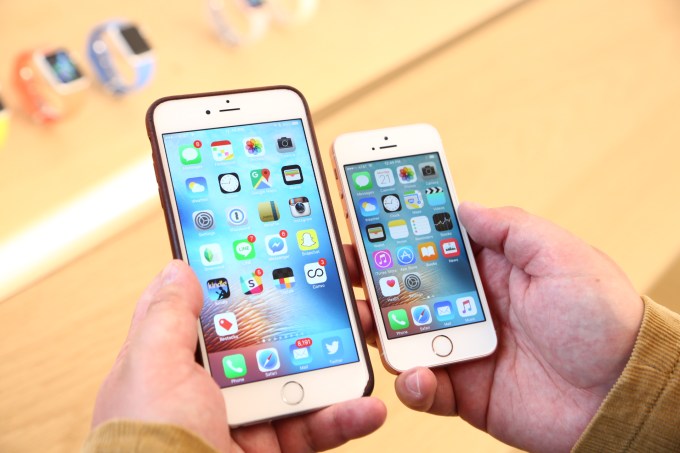
If your iPhone is getting on in age, you may have noticed it runs slower after the latest updates.

That's because Apple slows down iPhones with aging batteries, the company recently disclosed. According to Apple, software updates throttle older iPhones because their batteries are "less capable of delivering peak energy loads," according to an apology the company issued Thursday.

If you're wondering what slower performance means for your iPhone, Apple posted a help document outlining exactly what its "power management" does. Meanwhile, the company launched a $29 in-store battery replacement service on Saturday, allowing those looking to speed up their iPhone a cheaper way to swap out an aging battery.

If your phone has a really old battery, Apple says, your phone may take longer to launch apps and may display apps at lower frame rates — meaning you get a choppy user experience.

Here's the full list of reductions in performance your iPhone may see with an old battery:

Longer app launch times
Lower frame rates while scrolling
Backlight dimming (which can be overridden in Control Center)
Lower speaker volume by up to -3 decibels
Gradual frame-rate reductions in some apps
During the most extreme cases, the camera flash will be disabled as visible in the camera UI
Apps refreshing in background may require reloading upon launch
Apple also provided a list of features it said would not be affected on older iPhones:

Cellular call quality and networking throughput performance
Captured photo and video quality
GPS performance
Location accuracy
Sensors like gyroscope, accelerometer, barometer
Apple Pay

How to fix it

Here's Apple's technical explanation for its power-management software:

"This power management works by looking at a combination of the device temperature, battery state of charge, and the battery's impedance. Only if these variables require it, iOS will dynamically manage the maximum performance of some system components, such as the CPU and GPU in order to prevent unexpected shutdowns.

"As a result, the device workloads will self-balance, allowing a smoother distribution of system tasks, rather than larger, quick spikes of performance all at once. In some cases, a user may not notice any differences in daily device performance. The level of perceived change depends on how much power management is required for a particular device."

This basically means that an iPhone with an older battery can't provide enough power to operate at full capacity without hurting the iPhone's components. When an iPhone realizes the battery may not provide enough voltage and could hurt its parts, it automatically shuts down. That's a feature, according to Apple.

So Apple programmed a new piece of software that would prevent the iPhone from taking full advantage of its components. Instead of letting the iPhone run at full power, Apple instead has its phones "self-balance" and take a little longer to complete tasks.

The good news is that replacing the battery on your iPhone 6, iPhone 6S, or iPhone 7 should help it get back to full strength. If you're unsure whether your battery is old, Apple will release a software update that will let you check on its health. For the next year, Apple is charging only $29 for a battery replacement at one of its stores. That reduced pricing went into effect on Saturday, a bit sooner than planned, Apple's Trudy Muller told Business Insider.

"We expected to need more time to be ready, but we are happy to offer our customers the lower pricing right away. Initial supplies of some replacement batteries may be limited."

Image result for Information, Faster, Cleaner – Web Design for the Millennial
Everything’s smarter now. Name a medium, add the word ‘smart’, and you have a device that our generation loves. The smarter web, smartphones, smart TV, and smartwatches. The web has evolved, it has a mind now, and it’s detecting your mood even. Audiograph certainly claims to be able to detect your mood and reflect that with appropriate colors on their website. Jazzy graphics, peppy animations – their days appear to have ended. Certainly, the minimalist school of thought did let us in on that secret long back. So, where’s web development headed? As we start preparing for the transition to a new year, we decided to explore what’s trending and what works.

Content Design is In

The web is all about users, and we have known it ever since. Designers have always been designing for the end-user and what does the user consume? Information, of course! And, well, since all websites provided information, the creative ones wanted to differentiate. You can’t get lost in the crowd, and you need to be unique. The differentiator grew to be methods that could capture the user’s attention. So, things were popped up, bells and whistles added and wireframes became important. The content was later fitted into the designed wireframe.

Transition to today and the user has convincingly rejected those differentiators. After all, what they want is just information and then again only the ones that are relevant. A static, non-living web doesn’t know each of their users. So, how does it serve relevant information? Well, talk to your user, and that’s how the conversational web is evolving. Think Alexa, think of Amazon Echo, or Google Home.

Traditional web designers are making the transition – designing for all forms of media. The relevant information needs to be delivered irrespective of the type of the media. The content, the data has become the driver of page design. With that, it is data visualization techniques that are becoming important, starting at the top with salient information and then allowing the user to choose the path to dig deeper. That’s why Virgin America revamped their web design to a consolidated, single-page view of the minimum information that a user would need to start off with.

Show me the information, quick!

Kill time waiting for pages to load? Never happened, the web user has always had a disdain for sites that made them wait. Google too wants to make it faster, loading elements in milliseconds. That’s where user patience is going to go. Companies are rethinking the utility of each piece of script that they need to have, building strategies around speed.

A report by the Aberdeen group shows that a one second delay in page load leads to as much as a sixteen percent decrease in customer satisfaction! That’s a split-second error potentially leading to millions in lost revenue. For example, Amazon reports that a performance improvement of a hundred milliseconds leads to an increased income by one percent. Such is the power of speed. Websites have, therefore, started leveraging technologies like Accelerated Mobile Pages (AMP) to enhance performance.

As people expect information to be delivered fast, web developers have started using browser caching techniques that allow content to be stored on the visitor’s machine temporarily. Google’s open-source AMP project promises to make the web “blazing fast”. Their stated objective is to “enable the creation of websites and ads that are consistently fast, beautiful and high-performing across devices and distribution platforms.”

Making things clean and removing the clutter is where the hustle and bustle come as companies scamper to meet the user needs of faster delivery of content. Videos as backgrounds are being re-assessed to address the question of whether the video serves a purpose or it’s been put in place to look trendy. Are all the images on the website required or could a lesser number of images tell the same story? Instead of imagery, font design is being looked at to enhance aesthetics and enhance performance.

Micro-interactions

Interactions are the in-thing, conversations in the virtual world. Feedback, explanations, and entertainment, all in one place, at one moment. That’s the user experience that developers are creating. These interactions start small, instead of micro but could lead to conversations that engage. Engaging discussions mean increased chances of conversion and so everyone is lapping it up.

Micro-interactions are now an indisputable facet of the web. Facebook uses them, well you ‘like’ posts and Amazon and TripAdvisor uses these micro-interactions to prompt users to rate a service. It is now a fundamental part of website design, adding functional parts that make a user’s experience better. Designers are looking at user personas and creating visualizations that would be intuitive and responsive to the user. Each event in a user journey is now deconstructed to handle one task, and design interactivity around it. Any interaction triggers further processes and instructions lead the user to information discovery.

Dutch airlines company, KLM’s microsite ifly50 has drawn wide applause for its carefully thought through and well-executed micro-interaction design. A call-to-action is prompting the user through each micro-interaction that they execute on their site. Cleverly crafted and uniquely designed to capture the change of user states and preferences and deliver relevant content that gives them more reasons to travel.

The prognosis

Web design as classicists would consider it for example, where web designers created the framework and then put in the designs, is dead. However, web service is where the creatives are adding value, not by arranging things on a page but delivering content that a user needs. Siri and Android M are perhaps the future interfaces. Web development is moving towards designing web services to speak to each other through APIs, the way Google Now notifies whether it is time for you to depart to be at the meeting at the right time. The switch from web design to experience design is gaining ground. The user needs experiences delivered across different touchpoints, whether they be the smartphone, smart watches or even virtual reality platforms. Increasingly, web developers are scaling up to manage these integrated ecosystems and deliver content across channels.

Image result for Atlanta Web Design Agencies Delivering Value to Local Businesses
Web design has moved on pretty-darn quickly and back here in Atlanta, local agencies have made their mark designing excellent sites for businesses. With local companies having unique needs, be it in marketing or specialized design techniques, local firms are helping businesses reach their potential. Noted industry observers like Tech.co are also recognizing the value proposition that local web design agencies are bringing in. In a news article, they note, “there are many wonderful companies out there that are capable of helping small businesses reach their full potential.” Be they chatbots, prediction technologies, and smart devices, Atlanta web design agencies are helping local businesses make the transition to conversational user interfaces.

Visuals are good, but text engages

Today, web design is more about a conversation with the end-user and combining it with functional visuals. Check out Alexa, Telegram, or Messenger, and the focus has shifted to words. The trend is growing, and that is why the coming trends in website design would be focused on wordsmiths that can create scripts that the user would love conversing with. Web design firms are taking these discussions to local businesses, aiding them in seeing the value of interactivity. Being close to their customer, these agencies can better understand the local needs and support enterprises to with designs that would help them with better customer acquisition capabilities.

Designs with a purpose

Talking about conversations, it is customer insights that are most important when designing for the web or devices. The extra time to reflect on what the needs of the user are and what the company intends to achieve through the design is of utmost importance. Local web design agencies in Atlanta are making a big difference by offering clients effective strategies and consulting practices that lead to the efficient execution of their needs.

This perspective on web design implies that for any design to be set right, the purpose needs to be established first. As with any system design, transactional aspects of an interaction and user flows are taken into consideration. Rich experiences that incorporate the aspirations of local customers, their traditions and needs are becoming the norm. Human factors, especially psychology and their behavior online are contributing to how online presence is being designed. Users need to be able to achieve their objective, and local web design agencies are helping businesses build that convenience for their end-users.

Responsive design

Responsive designs are the buzzword. This involves designing customized user experiences and are not only about appearances. Traditionally, when one talks of responsive design, the typical responses that you will get will be how your screen elements should render well on different devices. While that was the initial approach to building responsive websites or using CSS to provide pages correctly on multiple devices or screen sizes, it is much more than that.

The process starts with putting together a strategy to achieve the goals and a structure that would help the target users navigate the website without confusion. A clear set of calls to action is required that would be important to create the customer conversions. As always, the visual design needs to be clutter-free, with easy information access and designed to enable optimal loading of the websites. In addition, all websites need to be consistent in design and branding. It is imperative to establish style guides and standards that could be followed across all areas of a website and thus help deliver a professional message to the user.

Local presence in Atlanta

In this day of a globalized world, this might seem a little out-of-place. After all, accessing a global pool of professionals gives you a greater choice. With the Internet and the setting up of appropriate governance and communication mechanisms, projects executed by a designer who is miles away from you can also succeed.

Working with a local designer, however, has multiple advantages. A neighbor tends to be more loyal to local businesses, and no one would want a neighbor who is unhappy. In addition, they would know your competition better as they are much more aware of the local business landscape than someone sitting miles away. A designer or a design company that is located far off will have no connection or feel of local needs, and you end up just being another customer. Your design needs will tend to be put into a theoretical framework. Also, it is easier to just pick up a phone or just visit your local designer when you need urgent help. It is also easier for them to send over support personnel to investigate an issue if you are nearby.

The barebones

Local designers are unanimous that web design has come a great way and CSS has made life much easier for the designer. A website can be created by literally anyone with products that offer almost everything as a drag and drop function. However, they note that the basics are still as important as they were always. Visual weight, navigation design, and directing the user around the screen are basics that should never be overlooked. Typography and layout, the positioning of screen elements and site usability determine user engagement too. While the basic structure can be designed quickly, you also need to be sure that when you launch your website, it has the appropriate quality regarding responsiveness and is also appropriately optimized for the search engines to crawl and index them.

Again, usability is subjective, but if you get down to the nitty-gritty, it is all about making a sensible website. For example, it should be easy to figure out the theme of a website by visiting the homepage itself. Simplicity has always been voted in by users, and multiple studies have shown that web design elements can still distract a user. An irritating pop-up, interruptions while reading, dull colors, and small font sizes can put off a reader, though the content might still be engaging.

Clutch, a B2B research, ratings, and reviews firm while announcing the best web design agencies for 2017 said, “the importance and value of strong UX have become more apparent in recent years, and these Atlanta agencies have proven their ability to deliver on this crucial aspect of design.”

Image result for Apple Confirms It Slows Down Old iPhones As Their Batteries Age
Do you have an iPhone that suddenly feels ... slower ... than ... it ... used ... to?

There might be a good reason for that, Apple confirmed to media outlets Thursday: The company is deliberately slowing down some iPhones, albeit for a good reason.

The batteries in older phones start to lose their oomph, especially if the devices have been repeatedly exposed to extreme temperatures. Phones used to abruptly shut themselves off if too much was asked of their decrepit batteries, since that helped protect sensitive electrical components.

Beginning with a software update it pushed out last year, however, Apple tried a new tactic: slowing down devices during moments of high demand so their beleaguered batteries could keep up.

Here’s how the company explained it in a statement to TechCrunch:

Some outraged consumers see this as a plot by Apple to force people to upgrade their iPhones more often ― and it could certainly have that effect ― but there is a cheaper fix: replacing your battery.

Before you go through the hassle, though, dig through your iPhone’s settings (here’s how) and see if your battery actually needs to be replaced. Look for this warning:

Apple will replace your battery for free if your phone is under warranty, according to The Verge. Otherwise, it costs about $80. If you’re willing to make the replacement yourself, you can expect to spend around $30 on the battery and necessary tools. 

Image result for The Bitcoin Hoax
Imagine an unholy alliance between cyber-utopians, money-launderers, financial fraudsters and ultra free-marketeers. What sort of toxic contraption might they dream up?

That would be Bitcoin.

Remind me, what is the problem for which Bitcoin is a supposed solution? More on that in a moment.

For the time being, the immediate Bitcoin problem is that speculators in the virtual currency have been on a wild ride, with the price of a Bitcoin rising from under $1,000 to as high as over $18,000 and back down to $12,000 before setting for the moment around $14,000. This makes a few early bettors very rich, but exactly what real economic good does that do?

Okay, in case you missed it, here’s the pitch. Paying with checks, credit cards or bank transfers leaves a trail. But there is no trail with Bitcoin. In a world of drug traffickers, terrorists and Kremlin weaponizing of all things cyber, this is supposed to be a plus. Say what?

Conventional forms of money other than cash have transaction costs. Your checkbook, your credit cards, not to mention digital forms of money transfer such as the PayPal and Venmo, nick you for fees. But there is no fee with Bitcoin. (Actually, if you manage your money carefully you can reduce credit card and checking account fees to next to nothing.)

Thanks to its ingenious, tamper-proof “blockchain” cryptotechnology (don’t ask), Bitcoin is absolutely safe. If you believe that, I have a Russian bridge for you to buy.

And unlike nasty governments, which do things like managing the money supply or preventing de-stabilizing speculation, Bitcoin is independent of any government. This is also billed as a plus.

In case you missed it, check out the era of 19th century “free banking” in the U.S. It was a time when tiny banks could create infinite amounts of credit. The result was an era of euphoric credit booms followed by bank panics and depressions.

Ah, but the number of Bitcoins in circulation is strictly limited to $21 million. That was the claim, anyway. Well, there are now hundreds of other digital currencies, and thanks to the miracle of leverage and speculation in Bitcoins, the true sum is far higher. Exactly how much higher? We don’t really know.

Now in fairness, central banks and bank regulators did a pretty good job of managing the money supply for half a century after the Great Depression, and then they messed up big time. In the 1980s, regulators started getting captured by fin-tech wizards—people not unlike Bitcoin enthusiasts—who started inventing new forms of infinite leverage. It took about 20 years for this brew to become truly toxic. The result was the collapse of 2008.

We have a lot of work to do in order to return the business of financial regulation and good monetary policy to democratic control. But if you think that task can be entrusted to an algorithm, consider this. It’s an old idea—economists Milton Friedman and Friedrich Hayek advocated putting the money supply on auto-pilot.

But if that policy had been in effect when the financial collapse of 2008 occurred, and the economy had been left to the tender mercies of the invisible hand (much less the invisible cyber-hand), all of the banks would have gone bust and the economy, instead of experiencing the Great Recession, would have been in total collapse. Ben Bernanke, a Friedman enthusiast who was chairman of the Federal Reserve at the time, acknowledged that a hands-off policy was the opposite of what was needed.

So the next time the wizards of speculation produce yet another financial collapse, who ya gonna call? Bitcoin? Sorry, there’s nobody home.

I realize I’m in awkward company, here. The CEO of JPMorgan Chase, Jamie Dimon (who helped bring us the financial collapse, doesn’t like Bitcoin. The big banks don’t like the competition, right? 

“No government will ever support a virtual currency that goes around borders and doesn’t have the same controls,” said Dimon. “It’s not going to happen.”

Dimon is right that the world’s central bankers should shut down virtual currencies, as both an invitation to money laundering and as a threat to monetary stability. Some central banks, such as the bank of Japan, are planning to create official digital currencies for cheap or free transactions, but in a context of regulated monetary policy. Europe has long had a less whiz-bang version of this, known as giro transfers, in which people instruct their banks to make payments on their behalf to vendors’ banks, rather than writing checks

And if the issue is more competition, the remedy is to break up the big banks, not to return to a digitized version of 19th century boom and bust credit creation. I may agree with Dimon on Bitcoin – I agreed with Steve Bannon on not going to nuclear war with North Korea – but that doesn’t mean I support either Bannon’s racism or Dimon’s predatory banking.

In sum, we should hardly be surprised that Bitcoin is on a wild speculative ride—that’s the essence of privatized credit creation. And if you think this gambling is zero-sum and victimless, kindly Google these: Panic of 1837, Panic of 1857, Panic of 1873, Panic of 1893, Panic of 1907 and, of course, the Great Depression of 1929-1940 and the Collapse of 2008.

Sorry, but cyber-Santa is an illusion. Wishing us all a Merry Christmas and a Solvent New Year.

Robert Kuttner is co-editor of The American Prospect and professor at Brandeis University’s Heller School. His forthcoming book is Can Democracy Survive Global Capitalism?

MKRdezign

{facebook#https://facebook.com} {twitter#https://twitter.com} {google-plus#https://plus.google.com} {pinterest#https://pinterest.com} {youtube#https://youtube.com} {instagram#https://instagram.com}

Contact Form

Name

Email *

Message *

Powered by Blogger.
Javascript DisablePlease Enable Javascript To See All Widget