BuzzFeds has breaking news, vital journalism, quizzes, videos, celeb news, Tasty food videos, recipes, DIY hacks, and all the trending buzz you’ll want to share with your friends.

Articles by "Tech"

Image result for 3 signs you could be dating a high conflict person
Dating is tough. There are so many different, harsh ways you can be dumped nowadays.

But you also have to be careful about who you date in the first place, because toxic, high conflict people have always been around.

The trouble is, these people are often hard to spot because at first they come across as someone charismatic, attractive, and affectionate.

In a blog post in Psychology Today, therapist Bill Eddy highlights three ways you can suss out whether the person you are dating is high conflict, and will likely cause you trouble later on. Eddy and his colleague Megan Hunter created a survey and asked people who ended up in relationships with high conflict people what red flags they missed in the early stages.

Here were the three warning signs they came up with:

1. Excessive charm
About 80% of the people who responded to the survey said they were swept up by their partner's charm while they were dating. They said there was an "immediate spark," but this evaporated once they had committed to the relationship.

"Charm doesn’t always mean that the person is an HCP, but it’s a surprising warning sign," Eddy wrote. "If the person seems too good to be true, you might look deeper."

2. Fake compatibility
Another way high conflict people seem too good to be true is how compatible they seem. On the surface it looks like they have a lot in common with their partners, when in reality they are probably just mirroring their victim's behaviour in order to reel them in.

Once the victim is committed to the relationship, the high conflict person starts to show their true colours.

3. Intense Sexuality
Nearly 50% of the respondents said their physical relationships developed very quickly and intensely. It is common for narcissists to be sex addicts, or at least claim to be. While they are interested in targeting you, you will be the object of their affection. But once you make it known you are committed, they will seek their thrills elsewhere.

It is important to remember that these are just warning signs, and are in no way conclusive indicators that someone is high conflict, a narcissist, sociopath, or psychopath.

But it is a good idea to keep them in mind when you meet someone new, just because so many people fall for the same tricks and end up in abusive relationships.

"Ask friends and family what they think. Take your time and don’t believe that you can change him or her," Eddy wrote. "The partner you really want to find will let you be yourself, and let you take your time to get to know them."

Image result for PREDICTIONS: The most important things that will happen in tech in 2018
But that's changing. The populist backlash against the tech giants this year bled into the halls of the Senate, culminating in one of the first significant efforts to regulate some of those companies — the introduction of the Honest Ads Act. That proposed law would have required people placing political ads on internet sites such as Facebook and Google to follow the same transparency rules that apply to television, radio, and print.

While that bill stalled, the push for regulation is only going to continue. And the proposed rules could cover a lot more than just political ads.

For example, Democratic Sen. Mark Warner has held meetings with experts looking into whether or not tech companies intentionally make products addictive, according to Axios. The meetings come as a growing number of such experts are warning that the dopamine hit you get whenever your Instagram post gets 100+ likes may not be incidental, but an intended result of the design of such features.

Expect to see additional inquiries along the lines of Warner's. And don't be surprised if you see more bills proposed that might target not only political ads and addiction, but privacy and the industry's arguably anticompetitive practices.

Of course, the chances of any new regulations being put in place by an antiregulatory Trump administration or any new legislation being passed by a Republican-controlled Congress — even in this political climate — is next to zero. But it is significant that more policymakers are keeping a closer eye on the tech industry.

Disney will become Netflix's biggest rival, and a war will begin
Netflix has room to worry in the coming year, because Disney is clearly gunning for it.

The Mouse House's bid to purchase much of 21st Century Fox is clearly aimed at Netflix. But even if the government blocks that deal, Disney is poised to become Netflix's biggest rival.

Next year, the Hollywood giant will launch its first standalone streaming service. That service will be packed full of the conglomerate's impressive collection of movies and television shows, which includes everything from Mickey Mouse to Luke Skywalker. Additionally, Disney-owned ESPN will finally launch its own streaming video service, which should be enticing to those cord cutters who are tired of missing their favorite sports.

But Disney could be in an even better position to challenge Netflix if the Fox deal does go through. In addition to gaining a majority stake in Netflix-rival Hulu, the Mouse House would get access to more live sports, an even broader assortment of valuable intellectual property, including the movie rights to Marvel's X-Men, and a great collection of television series from the FX network.

All of this comes in the wake of Disney announcing that it plans to pull its library from Netflix. That move alone is going to force Netflix to spend billions of dollars to develop new TV shows and movies to replace what it's losing from Disney. Those efforts could succeed — or they could be flops.

Disney, for its part, doesn't have to worry as much about flops. It already has every weapon it needs in its budding war against Netflix.

Tech companies will pour more money into Hollywood — but get little in return
Apple, Amazon, Google, and Facebook are all investing heavily in developing original movies, television shows, and other video content. Each is slated to pour in billions of dollars in the endeavor.

Their ambitions are understandable. For Apple, being able to offer some great TV series in Apple Music would help set the service apart from rivals such as Spotify and Pandora. It would also give Apple a way to squeeze more money out of customers after they buy one of its gadgets.

Meanwhile, Google and Facebook hope to grow their ad businesses by getting a piece of the lucrative television ad market. And Amazon hopes to drive subscriptions to its Prime service, because Prime customers tend to buy more things from it than other consumers.

But motivations and money aside, the tech giants' efforts aren't likely to produce many hits, if this past year is any indication.

Apple's first original shows, "Carpool Karaoke" and "Planet of the Apps," were not only critical duds, there's little evidence they found a significant audience. Google produced shows for YouTube featuring stars including Ellen DeGeneres and Kevin Hart, but viewership has been mediocre. And Facebook's new Watch video service has performed poorly.

While Amazon's had more success both critically and commercially, that success could be undermined by the recent sexual misconduct allegations against its former studio head and against Jeffrey Tambor, the star of one of its most high-profile shows.

Apple appears to have learned from some of its mistakes, hiring a pair of A-list producers to head up its video effort. But it's hard to see how Apple Music in particular can set itself apart from all the other video services with just a handful of shows. It's going to need to build up a much deeper library and is going to need to develop a blockbuster, must-watch show. Good luck.

For its part, Hollywood seems glad to take all the "dumb money" flowing in from the tech companies, as a connected source told New York Times tech columnist Farhad Manjoo earlier this year. To date, the tech giants, aside from Netflix and Amazon, haven't shown that they know much about how to produce great content besides writing a fat check.

But the truth is that the tech companies' seemingly bottomless pits of money can't buy hits. You can hire the best talent in the world, but you also have to know how to get people to watch what they produce. And that's something the tech companies don't seem to have figured out yet. So, get ready for another year of flops funded by dumb tech money.

Image result for Here's when Google, Samsung, and LG's 2018 flagships will potentially launch
As 2017 rapidly comes to a close, many smartphone manufacturers are likely in hyper drive, putting the finishing touches on their 2018 devices. A recently leaked chart may give a better idea of when those devices will actually launch.

Assuming the leaked document, which was originally shared on the Chinese social media platform Weibo and was later translated by Gizmo China, is accurate, you can expect Samsung's Galaxy S9 and S9+ and LG's G7 and G7+ in February, Samsung Galaxy Note 9 and LG V40 in September, and Google's Pixel 3 and Pixel 3 XL in October.

The leaked document is comprised of devices that are expected to run Qualcomm's new Snapdragon 845 processor, which is designed for high-end smartphones. Thus, the devices on the list are all flagship-tier products.

Expect a flurry of phones in the fall
Some of the dates on the list aren't much of a surprise. The release dates of many of the devices included on it have already been floating around in rumors. And some companies' release schedules are fairly predictable; both Samsung and LG, for example, typically announce new devices during Mobile World Congress (MWC) in late February.

But the list also offers an outlook on upcoming devices from some of the smaller phone manufacturers. Between April and August, consumers can expect to see launches of Xiaomi's Mi 7, HTC's U12, the OnePlus 6, Nubia's Z18, Sony's Xperia XZ Pro-A, and the Nokia 10. Some of those devices, however, may not land in the US.

Things should pick up in the fall. In addition to the Note 9 and the V40 in September, the list suggests we should expect to see Xiaomi's Mi Mix 3 launched internationally. In addition to the Pixel launches in October — which should follow the unveiling of Android P (whose official nickname, we're guessing, will be Pop-Tart) — other potential launches that month could include Nubia's Z18S, Sony's Xperia XZ2, and HTC's U12+.

Finally, the Moto Z (2019 edition) may be announced in November and the OnePlus 6T and Samsung's Galaxy W2019 in December.

While the list does fall in step with the typical launch cycles for most of the included companies, particularly Samsung, Google, and LG, none of these devices are confirmed at this time.

Image result for The cost of bitcoin payments is skyrocketing because the network is totally overloaded
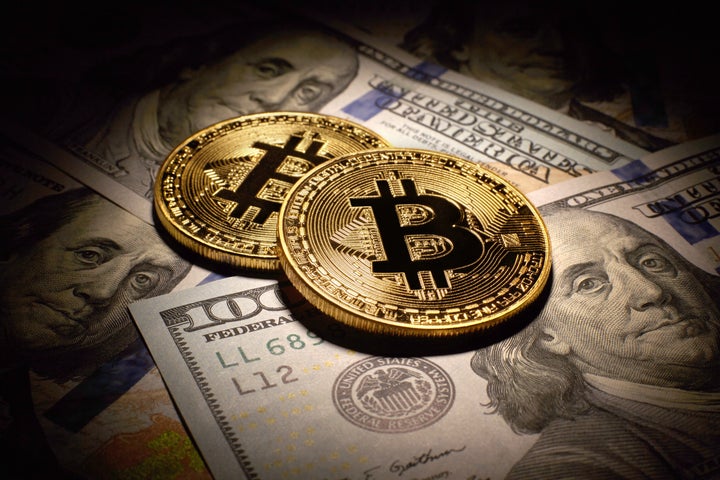
Bitcoin transaction fees have gone from around $2 a transaction in October to $37 in late December.

Bitcoin use in the real world may have started with the purchase of a pair of pizzas, but you'd be unlikely to see it used for such a minor exchange today.

That's because as bitcoin has soared in popularity it's become too expensive to use in small transactions.

The problem came to a head in early December, when Steam, the popular downloadable video game store, announced it would stop accepting bitcoin payments for games, citing the currency's volatility and high transaction fees. Steam relied on a bitcoin payment system called BitPay. Among BitPay's other customers are Microsoft, online retailer NewEgg, and APMEX, which sells precious metals online.

Business Insider checked in with BitPay communication manager James Walpole to find out why bitcoin transactions have become so costly. Here's what he had to say:

Don't blame BitPay for high bitcoin transaction costs

You might think that services like BitPay are to blame for bitcoin's high transaction costs. After all, BitPay's service, which lets merchants accept bitcoin as payment, is similar to a credit card processing service, and retailers are often complaining that credit card fees cut into their profits.

But the fees charged by BitPay and similar companies represent only a small portion of the total cost of a typical bitcoin transaction. For its part, BitPay charges merchants a 1% processing fee per transaction. If a customer spends $10, BitPay keeps $0.10, while sending the vendor the remaining $9.90. 

That's the same fee charged by BitPay rival CoinGate, but one that is less than what's charged by Stripe or Visa on credit card transactions. Those fees can add up over many transactions, but they're not what's making individual bitcoin payments so costly.

Instead, blame the bitcoin miners
So if it's not BitPay and other bitcoin payment processors that are making transactions using the cryptocurrency so expensive, what is? Walpole points the finger at bitcoin miners.

Miners are the people or companies that record data in the bitcoin blockchain, the digital ledger that keeps track of all bitcoin transactions. Miners save those transactions in so-called blocks; they complete a block by solving ever-more-complex cryptographic puzzles.

Mining has become an expensive proposition. It requires high-powered computers that use lots of energy. Miners are typically in the business to make money. They're compensated for their services in three ways.

When they solve a particular puzzle and complete a block, they are awarded with newly created bitcoin. But they also collect fees from both individual bitcoin holders and from bitcoin payment processors such as BitPay.

Its those fees that have made using bitcoin so pricey.

Mining fees are skyrocketing
The first type of fee miners collect are mining or transaction fees. These fees in particular are surging.

At the end of September, the average bitcoin mining fee was around $2 per transaction. By December 21, average fees reached a high of around $37. 

The surge in fees was a matter of supply and demand. As bitcoin's price surged from $10,000 to $20,000, increasing numbers of people wanted to invest in the cryptocurrency. The upsurge in users and transactions increased the demand for miners' services.

At the same time, supply is constrained. The blockchain system that underlies the cryptocurrency can only process around 3 to 7 transactions per second. So at any given moment, a greater number of transactions were competing for a relatively small number of slots in the ledger.

But another, related factor was at work too. Mining fees, which are paid by individual users to miners, are actually optional; bitcoin users don't have to pay them. But they usually do, because the fees encourage miners to record their transactions sooner rather than later. The sooner you want a transaction written to the blockchain, generally the higher mining fee you'll have to pay. 

The advantage of having a transaction recorded quickly is that the sooner it's recorded, the sooner you can spend or sell the coins you've received — and the sooner a merchant will mark a deal as completed. That speed can be important when using bitcoin to buy high-demand goods, like concert tickets, which can sell out fast.  

But speeding the recording of bitcoin transactions has been particularly important in a volatile market such as the one the cryptocurrency has experienced in recent months. With the price of bitcoin fluctuating by hundreds or even thousands of dollars in mere hours or minutes, there's a big benefit to being able to buy and sell coins sooner rather than later — and many bitcoin traders have been paying up for just that advantage.

There's also network costs
In addition to mining fees, bitcoin users often have to pay a second fee that ultimately goes to miners, something called a network fee. Payment processors such as Bitpay and Coinbase collect such fees from consumers making purchases to pay miners to move funds from an individual customer's bitcoin wallet address to that of a merchant. The payment processors add the fee to the transaction total.

So when a customer buys something from a merchant using BitPay via the customer's personal digital wallet, the total the customer pays includes both the price of the purchased item and the network cost. BitPay doesn't make any profit off this fee though, Walpole said.

Like mining fees, network costs fluctuate based on how busy the network is. Unlike mining fees, however, network charges aren't optional; BitPay charges them on all transactions it handles to ensure that miners record those transactions as quickly as possible.  

The USD price of bitcoin has fluctuated considerably since September.

Bitcoin's price has fluctuated a lot over the last year, but overall has gone way up. And bitcoin transaction costs have gone up in tandem with it.

But the rise in bitcoin's value and the jump in transaction fees aren't as closely linked as they may sound. The price of bitcoin doesn't have a direct impact on transaction fees. It's not like miners are charging more or bitcoin users are having to pay higher fees just because bitcoin is worth more.

Instead, all of the volatility in the price of bitcoin had led to more people buying and selling the cryptocurrency — which has meant a whole lot more transactions that need to be recorded. And more demand has led to higher fees. 

But volatility is affecting demand in a more important way. Because of those fluctuations, the value of bitcoin can change significantly in a short amount of time. When there are a lot of transactions taking place, it can potentially take days to record them all, during which time bitcoin's value could have changed by thousands of dollars.

Merchants risk losing money if they lock in a price with a customer and the value of bitcoin falls before the transaction is completed. That's not a risk many merchants or bitcoin traders take lightly, so many have been willing to accept higher fees to speed the recording of their transactions.

Image result for Here's exactly how your iPhone gets slower when you have an old battery — and how to replace it
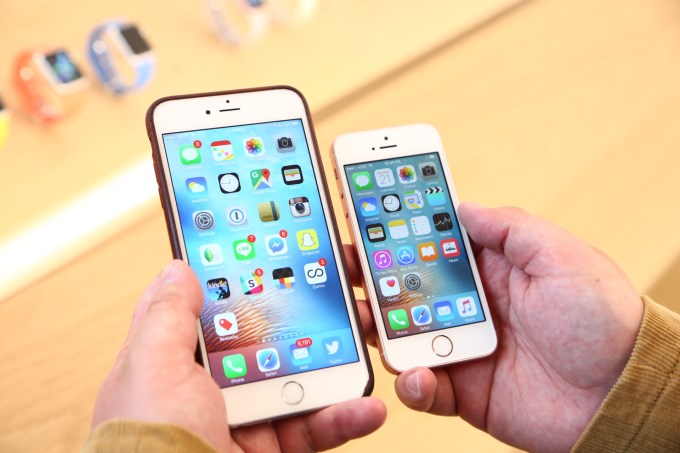
If your iPhone is getting on in age, you may have noticed it runs slower after the latest updates.

That's because Apple slows down iPhones with aging batteries, the company recently disclosed. According to Apple, software updates throttle older iPhones because their batteries are "less capable of delivering peak energy loads," according to an apology the company issued Thursday.

If you're wondering what slower performance means for your iPhone, Apple posted a help document outlining exactly what its "power management" does. Meanwhile, the company launched a $29 in-store battery replacement service on Saturday, allowing those looking to speed up their iPhone a cheaper way to swap out an aging battery.

If your phone has a really old battery, Apple says, your phone may take longer to launch apps and may display apps at lower frame rates — meaning you get a choppy user experience.

Here's the full list of reductions in performance your iPhone may see with an old battery:

Longer app launch times
Lower frame rates while scrolling
Backlight dimming (which can be overridden in Control Center)
Lower speaker volume by up to -3 decibels
Gradual frame-rate reductions in some apps
During the most extreme cases, the camera flash will be disabled as visible in the camera UI
Apps refreshing in background may require reloading upon launch
Apple also provided a list of features it said would not be affected on older iPhones:

Cellular call quality and networking throughput performance
Captured photo and video quality
GPS performance
Location accuracy
Sensors like gyroscope, accelerometer, barometer
Apple Pay

How to fix it

Here's Apple's technical explanation for its power-management software:

"This power management works by looking at a combination of the device temperature, battery state of charge, and the battery's impedance. Only if these variables require it, iOS will dynamically manage the maximum performance of some system components, such as the CPU and GPU in order to prevent unexpected shutdowns.

"As a result, the device workloads will self-balance, allowing a smoother distribution of system tasks, rather than larger, quick spikes of performance all at once. In some cases, a user may not notice any differences in daily device performance. The level of perceived change depends on how much power management is required for a particular device."

This basically means that an iPhone with an older battery can't provide enough power to operate at full capacity without hurting the iPhone's components. When an iPhone realizes the battery may not provide enough voltage and could hurt its parts, it automatically shuts down. That's a feature, according to Apple.

So Apple programmed a new piece of software that would prevent the iPhone from taking full advantage of its components. Instead of letting the iPhone run at full power, Apple instead has its phones "self-balance" and take a little longer to complete tasks.

The good news is that replacing the battery on your iPhone 6, iPhone 6S, or iPhone 7 should help it get back to full strength. If you're unsure whether your battery is old, Apple will release a software update that will let you check on its health. For the next year, Apple is charging only $29 for a battery replacement at one of its stores. That reduced pricing went into effect on Saturday, a bit sooner than planned, Apple's Trudy Muller told Business Insider.

"We expected to need more time to be ready, but we are happy to offer our customers the lower pricing right away. Initial supplies of some replacement batteries may be limited."

Related image
Do me a favor; take a look at the video above:

What do you notice about it? I mean, sure, it’s an advertisement and they’re trying to sell a robust address book application. However, there is a point to be made here. The person the ad follows, what does he do? He is not really shown doing much of anything in a professional sense. There is one meeting, and you get no sense of what this guy does or can do. However, the one thing he does do well is make connections.

We see him laughing, talking, even boxing. While it is likely this person is very intelligent and very talented, the fact is he seems to get ahead primarily through knowing who his contacts know and making connections. In short, it wasn’t his talent or intelligence that got him to the top at the end, it was his ability to forge connections.

Most Jobs Are Found Through Connections
If you are a recent college graduate, you probably heard the same tired story I’ve heard: if you have your degree it will open so many doors. If you are like me, you are probably coming to the realization that that is simply untrue. You will probably find resume after resume being sent out without a response. If you are lucky, you will get a rejection notice and can at least know you should no longer hold out any hope.

If this is the first time you are hearing the tidbit “it is not what you know, it is who you know,” then you probably fall into this recent college graduate category. This old expression is not simply the cynical cry of those who cannot make the system work for them; it is a statement of fact.

Of all new positions, roughly 70 percent are filled either through internal hires or referrals. This means that if you are an outsider and have no connections, your odds of getting a certain job have already plummeted to 30 percent. When you combine this with the numerous other factors related to your job search it is clear that your best hope is to forge connections.

You Want Your Network Before the Job Goes Live
One of the mistakes that job seekers make is attempting to find recruiters and ask them about a job after it goes live. Now, this is acceptable and even laudable, however you should not be surprised if you fail to get a job. Regardless of when you make the contact, however, if you want to work for that company makes sure you maintain your network. Make friends, keep people talking and show genuine interest in working for that company.

However, do not stop at the recruiters or HR representatives – reach out to managers and other people who you hope to be working with. Build a network, get to know their hobbies, spend time with them… and yes, punch one in the face if that is what they are inclined to do in your free time. Networking is not just about forming professional connections and getting to know people, it is also about making friends. People are more inclined to hire you if they know they can work with you.

Get Ahead of the Curve
Modern technology makes it easier than ever to find the movers and shakers in a business. Usually, the names of the management staff in a business are just a Google search away. Failing that, other business and brands like LinkedIn and Covve help you find connections based on the people who are already in your network. Finding these links in the chain will help you grow from one person to another, to another, and to another.

Image result for Go Wireless with the Latest, Greatest, Next-Gen Earphones & Headphones
Excited about getting the hot new iPhone X, 8 or 8 Plus?  Well, hear this loud and clear: the new models no longer come with headphone jacks, so you’re going to need at least one of these game-changing wireless marvels. The latest appcessories work seamlessly with the iPod, iPhone and iPad, and adapt to you for an easier, smarter, more stylish and more intuitive experience, and their sleek designs can’t be beat.

V-MODA: Crossfade 2 Wireless

This stylish knockout is V-MODA’s most versatile model yet. Boasting nearly-identical sound quality in both analog and wireless playback, Crossfade 2 Wireless Over-Ear headphones ($330-350) offer the best of both worlds with wired and wireless modes for hybrid listening. Multitasking users can pair the headphones with two sources at a time, such as a smartphone and laptop for work or a smartphone and smartwatch for working out. State of the art audio codec enables CD-like quality sound over Bluetooth which allows for the best lossless wireless listening experience. It’s a great, comfortable choice for travel; the CliqFold Hinge folds the headphones into a small case, and Passive Noise Isolation naturally cuts out the distractions of jet engines and unwanted noise without the hiss and pressure of Active Noise Canceling. A bigger battery provides over 14 hours of music, and unlimited hours in wired analog. A hidden mic and 1-Button SpeakEasy cable allows calls on-the-go, at the office or for gaming. And for DJs, there’s nothing cooler thanks to a new ventilation system for air circulation on stage, and custom shield kits that let you change your shield material and color, or customize with a 3D-print or laser-engraved logo. Available in Black Matte, White Matte and Rose Gold (with aptX) at V-MODA.com.

This legacy audio brand has introduced a new generation of Lightning-powered earphones that work with the iPod, iPhone and iPad. The Pioneer Rayz Plus ($150) are the first to market headphones with second generation Lightning Audio Technology—that means no battery to replace and no cable for charging. They automatically recognize "Hey Siri" commands from users, even if their phone is in their pocket. Rayz scans your ear to optimize noise-cancelling performance uniquely to your ear and environment, and the HearThru mode lets you hear your surroundings without removing your earphones. Multitasking is a breeze with a talk-and-charge function that lets you do both at once while plugged into the Lightning port. Rayz are the only Lightning earphones to support a one-button click to mute the mics during a call, and the moment you stop speaking, Rayz microphones automatically go on mute, and automatically unmute when you begin speaking through audible tones.

When you remove the earphones, AutoPause automatically pauses the video or music being played. Put them back on and the content resumes. And Rayz Plus speaks more languages than you do with native language support available for English, Chinese, French, German, Italian, Portuguese and Spanish. And best of all it the iOS companion app, an integral part of the Rayz experience enabling you to personalize the earphone’s settings, such as adjusting audio EQ and programming the smart button. Most importantly, the app creates the ability for Rayz earphones to continually improve with the delivery of new features via the software update interface.

V-MODA: Forza Metallo Wireless In-Ear Headphones

For audiophiles, V-MODA’s ultra-sleek Forza Metallo Wireless In-Ear Headphones offer ultimate ergonomics, a minimal design that can hide under a shirt collar, maximum battery life and an enhanced antenna. A new, special nanocoating technology makes the headphones sweat and weather resistant, with military-level durability to withstand every challenge. The 5.8mm micro driver delivers unique, balanced sound and natural stress-free acoustics with a vivid 3D Soundstage, and the Qualcomm wireless Bluetooth chipset has CD-quality wireless audio playback. The battery provides up to 10 hours of music playback and is ultra-fast charging. Two-device connectivity allows you to pair your Bluetooth device and use your headphones up to 33 feet and multitask with two devices at one time. Noise-cancelling dual microphones make calls and voice recognition crystal-clear. For comfort, four different sizes of bass-level isolating soft silicone fittings ensure outstanding noise-isolation, tightest bass and best fit. Detachable sport fins come in three sizes for the best fit while working out. And for high style, customization is available with your choice of accessory 3D designs (diamond, rose, mic, steampunk and more) that come in acrylic or precious metals including bronze, gold, rose gold and platinum, raising the prestige level as well as the price. It’ll cost you $7,500 to roar along with Katy Perry wearing twin lion head Forza Metallo headphones in platinum. Models in Gunmetal Black and White Silver are available for $170 at V-MODA.com.

Image result for The Bitcoin Hoax
Imagine an unholy alliance between cyber-utopians, money-launderers, financial fraudsters and ultra free-marketeers. What sort of toxic contraption might they dream up?

That would be Bitcoin.

Remind me, what is the problem for which Bitcoin is a supposed solution? More on that in a moment.

For the time being, the immediate Bitcoin problem is that speculators in the virtual currency have been on a wild ride, with the price of a Bitcoin rising from under $1,000 to as high as over $18,000 and back down to $12,000 before setting for the moment around $14,000. This makes a few early bettors very rich, but exactly what real economic good does that do?

Okay, in case you missed it, here’s the pitch. Paying with checks, credit cards or bank transfers leaves a trail. But there is no trail with Bitcoin. In a world of drug traffickers, terrorists and Kremlin weaponizing of all things cyber, this is supposed to be a plus. Say what?

Conventional forms of money other than cash have transaction costs. Your checkbook, your credit cards, not to mention digital forms of money transfer such as the PayPal and Venmo, nick you for fees. But there is no fee with Bitcoin. (Actually, if you manage your money carefully you can reduce credit card and checking account fees to next to nothing.)

Thanks to its ingenious, tamper-proof “blockchain” cryptotechnology (don’t ask), Bitcoin is absolutely safe. If you believe that, I have a Russian bridge for you to buy.

And unlike nasty governments, which do things like managing the money supply or preventing de-stabilizing speculation, Bitcoin is independent of any government. This is also billed as a plus.

In case you missed it, check out the era of 19th century “free banking” in the U.S. It was a time when tiny banks could create infinite amounts of credit. The result was an era of euphoric credit booms followed by bank panics and depressions.

Ah, but the number of Bitcoins in circulation is strictly limited to $21 million. That was the claim, anyway. Well, there are now hundreds of other digital currencies, and thanks to the miracle of leverage and speculation in Bitcoins, the true sum is far higher. Exactly how much higher? We don’t really know.

Now in fairness, central banks and bank regulators did a pretty good job of managing the money supply for half a century after the Great Depression, and then they messed up big time. In the 1980s, regulators started getting captured by fin-tech wizards—people not unlike Bitcoin enthusiasts—who started inventing new forms of infinite leverage. It took about 20 years for this brew to become truly toxic. The result was the collapse of 2008.

We have a lot of work to do in order to return the business of financial regulation and good monetary policy to democratic control. But if you think that task can be entrusted to an algorithm, consider this. It’s an old idea—economists Milton Friedman and Friedrich Hayek advocated putting the money supply on auto-pilot.

But if that policy had been in effect when the financial collapse of 2008 occurred, and the economy had been left to the tender mercies of the invisible hand (much less the invisible cyber-hand), all of the banks would have gone bust and the economy, instead of experiencing the Great Recession, would have been in total collapse. Ben Bernanke, a Friedman enthusiast who was chairman of the Federal Reserve at the time, acknowledged that a hands-off policy was the opposite of what was needed.

So the next time the wizards of speculation produce yet another financial collapse, who ya gonna call? Bitcoin? Sorry, there’s nobody home.

I realize I’m in awkward company, here. The CEO of JPMorgan Chase, Jamie Dimon (who helped bring us the financial collapse, doesn’t like Bitcoin. The big banks don’t like the competition, right? 

“No government will ever support a virtual currency that goes around borders and doesn’t have the same controls,” said Dimon. “It’s not going to happen.”

Dimon is right that the world’s central bankers should shut down virtual currencies, as both an invitation to money laundering and as a threat to monetary stability. Some central banks, such as the bank of Japan, are planning to create official digital currencies for cheap or free transactions, but in a context of regulated monetary policy. Europe has long had a less whiz-bang version of this, known as giro transfers, in which people instruct their banks to make payments on their behalf to vendors’ banks, rather than writing checks

And if the issue is more competition, the remedy is to break up the big banks, not to return to a digitized version of 19th century boom and bust credit creation. I may agree with Dimon on Bitcoin – I agreed with Steve Bannon on not going to nuclear war with North Korea – but that doesn’t mean I support either Bannon’s racism or Dimon’s predatory banking.

In sum, we should hardly be surprised that Bitcoin is on a wild speculative ride—that’s the essence of privatized credit creation. And if you think this gambling is zero-sum and victimless, kindly Google these: Panic of 1837, Panic of 1857, Panic of 1873, Panic of 1893, Panic of 1907 and, of course, the Great Depression of 1929-1940 and the Collapse of 2008.

Sorry, but cyber-Santa is an illusion. Wishing us all a Merry Christmas and a Solvent New Year.

Robert Kuttner is co-editor of The American Prospect and professor at Brandeis University’s Heller School. His forthcoming book is Can Democracy Survive Global Capitalism?

MKRdezign

{facebook#https://facebook.com} {twitter#https://twitter.com} {google-plus#https://plus.google.com} {pinterest#https://pinterest.com} {youtube#https://youtube.com} {instagram#https://instagram.com}

Contact Form

Name

Email *

Message *

Powered by Blogger.
Javascript DisablePlease Enable Javascript To See All Widget